



Choisir une plaque de cuisson à induction portable : Sécurité, efficacité et commodité au quotidien

Les tables de cuisson à induction portatives ont transformé la façon dont les gens cuisinent dans les petits espaces, en déplacement ou lorsqu'un brûleur supplémentaire est nécessaire. Elles exploitent la technologie d'induction pour chauffer directement les casseroles et les poêles, ce qui signifie que la surface de cuisson reste froide au toucher même lorsque les aliments chauffent. Pour de nombreux foyers, c'est plus qu'une simple commodité : c'est une option plus sûre et plus écoénergétique qui peut s'adapter aux dortoirs, aux bureaux, aux appartements ou aux installations de camping où l'espace est compté.
La cuisson par induction fonctionne en transférant de l'énergie électrique à une casserole ou une poêle par l'intermédiaire d'un champ magnétique. Seuls les ustensiles de cuisine compatibles avec l'induction chauffent, et le fond des ustensiles devient la principale source de chaleur, et non la table de cuisson elle-même. Cette distinction offre plusieurs avantages pratiques : un chauffage plus rapide, un contrôle précis de la température et une surface qui reste plus froide, réduisant ainsi le risque de brûlures et facilitant le nettoyage après un repas copieux.
Comment l'induction affecte la sécurité et l'utilisation quotidienne
L'une des caractéristiques les plus remarquables de l'induction est la sécurité. Puisque la surface en verre ne génère pas de chaleur à moins qu'une casserole compatible ne soit présente, il y a moins de risque de brûlures accidentelles. De nombreux modèles incluent également :
- Détection de casserole avec arrêt automatique en l'absence d'ustensiles de cuisine
- Minuteries d'arrêt automatique pour faire bouillir de l'eau ou mijoter des sauces
- Surfaces froides au toucher qui restent confortables au contact
- Protection contre la surchauffe et fonctions de verrouillage enfant sur certains modèles
Pour un usage quotidien, cette combinaison de sécurité et de contrôle signifie que vous pouvez rapidement faire bouillir de l'eau, maintenir un mijotage précis ou saisir des protéines en toute confiance. Cela rend également les tables de cuisson à induction idéales pour les foyers avec enfants, les cuisines partagées ou les espaces de travail comme les bureaux et les dortoirs où une solution rapide, propre et écoénergétique est précieuse.
Que rechercher lors de l'achat d'une table de cuisson à induction portable
L'achat d'une table de cuisson à induction portable consiste à équilibrer puissance, fonctionnalités et praticité. Voici les considérations les plus importantes pour vous aider à comparer les modèles en toute confiance.
Puissance de sortie et contrôle de la chaleur
La puissance détermine la rapidité avec laquelle une table de cuisson peut amener les aliments à température. Une unité d'induction portable typique varie d'environ 300 watts à 1800 watts. Une puissance plus élevée signifie un chauffage plus rapide pour des tâches comme faire bouillir de l'eau ou saisir de la viande, tandis que des réglages plus bas sont souvent suffisants pour mijoter des sauces ou garder le café au chaud. Recherchez un modèle avec une large gamme et des commandes numériques précises afin de pouvoir ajuster les températures pour différentes méthodes de cuisson.
Plage de température et précision
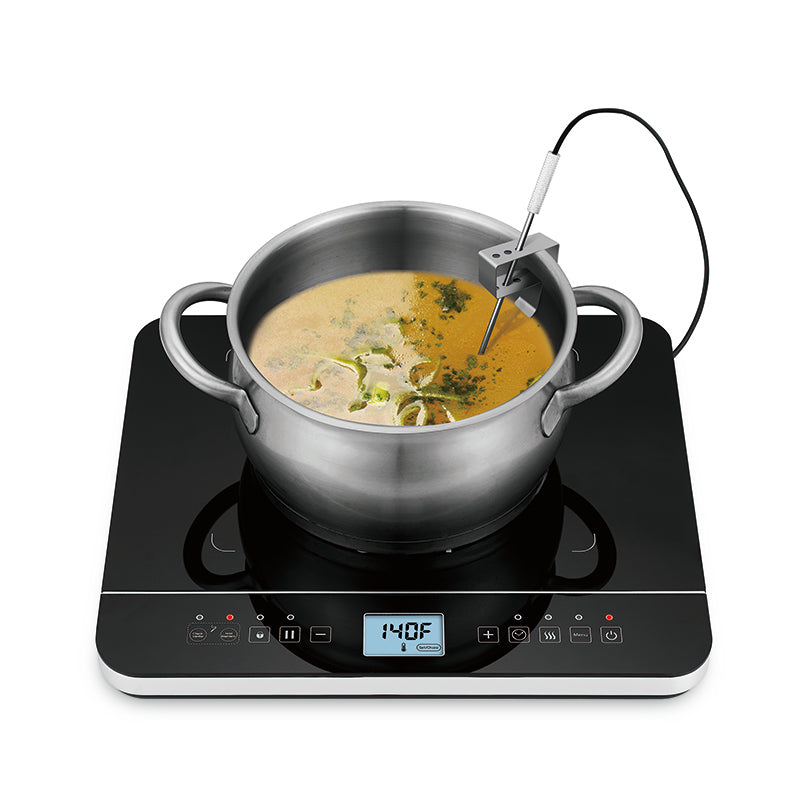
La plage de température est un autre facteur clé. Une large plage (par exemple, de 60 °C à 240 °C, ou de 140 °F à 465 °F) vous permet de faire fondre le beurre sans le brûler, de cuire délicatement les légumes à la vapeur et de maintenir des températures de mijotage stables. Certaines unités offrent des modes préréglés (par exemple, fondre, mijoter, bouillir, frire), tandis que d'autres offrent un contrôle manuel complet. Choisissez en fonction de la façon dont vous cuisinez le plus souvent et de l'importance des préréglages pour vous.
Compatibilité des ustensiles de cuisine et surface inférieure
L'induction fonctionne avec les casseroles et poêles à base magnétique. Les ustensiles de cuisine à fond plat ont tendance à chauffer plus uniformément, et une surface en verre cristallin solide facilite généralement le nettoyage. Si vous utilisez des casseroles anciennes ou antiadhésives, assurez-vous qu'elles ont un fond lisse et plat et qu'elles sont étiquetées comme compatibles avec l'induction. Certains modèles vous avertissent lorsqu'un ustensile de cuisine incompatible est détecté, ce qui aide à éviter les surprises en cours de cuisson.
Minuteries, fonctions de sécurité et facilité de nettoyage
Les minuteries sont pratiques pour les journées chargées, vous permettant de définir des plages de cuisson précises et de signaler la fin d'une tâche. Recherchez un arrêt automatique après une période définie, des signaux sonores et une interface utilisateur simple qui vous permet d'ajuster les réglages sans distraction. Un plateau entièrement lisse et facile à nettoyer réduit l'accumulation de saleté et simplifie l'assainissement après les sauces, les éclaboussures d'huile ou les amidons.
Portabilité et design
Comme il s'agit d'un appareil portable, le poids, la taille, la longueur du cordon et la stabilité sont importants. Une unité mince et compacte est idéale pour les dortoirs ou les petites cuisines, mais vous voudrez peut-être une surface légèrement plus grande pour les grandes casseroles. Considérez un modèle avec une base stable et un minimum de protubérances afin qu'il repose uniformément sur un comptoir, une étagère ou même une table de pique-nique lors d'une utilisation en extérieur.
Utilisations concrètes : des dortoirs aux voyages en camping
Les tables de cuisson à induction portables sont idéales là où les brûleurs traditionnels sont peu pratiques. Dans les dortoirs et les petits appartements, elles ajoutent un deuxième ou un troisième brûleur fiable sans avoir à installer une cuisinière pleine grandeur. Dans les bureaux, elles permettent des déjeuners rapides ou des repas prêts à servir. Les activités de plein air et les caravanes bénéficient d'un contrôle précis de la chaleur et d'un chauffage rapide, ce qui rend les démonstrations de cuisine, les rassemblements ou les repas en camping plus faciles et plus sûrs que les alternatives qui dépendent de flammes nues ou de réchauds au propane. Pour les buffets et les événements, ces unités peuvent servir de stations compactes pour réchauffer des sauces ou faire fondre du fromage, tout en laissant la cuisine principale libre pour les préparations plus importantes.
Démarrage : installation, cuisson et techniques de base
L'utilisation d'une table de cuisson à induction portable est simple, mais quelques conseils peuvent vous aider à tirer le meilleur parti de votre appareil et à éviter les erreurs courantes.
- Placez l'appareil sur une surface plane et résistante à la chaleur. Assurez-vous qu'il y a suffisamment d'espace autour du panneau de commande et des évents, le cas échéant.
- Vérifiez la compatibilité des ustensiles de cuisine avant d'allumer l'appareil. En cas de doute, tenez un aimant à la base — s'il adhère, la casserole devrait chauffer.
- Commencez par un réglage bas pour préchauffer, surtout lors de la saisie ou de l'ébullition d'eau, puis augmentez progressivement jusqu'au niveau souhaité.
- Utilisez la minuterie et les fonctions d'arrêt automatique pour gérer les temps de cuisson et éviter la surcuisson lorsque vous faites plusieurs choses à la fois.
- Gardez la surface propre et sèche. Les gouttes et les déversements doivent être essuyés rapidement pour éviter que les résidus n'affectent le contrôle de la température.
Ces étapes vous aident à obtenir des résultats constants sur un large éventail de recettes – du réchauffage des restes au mijotage des soupes, à la cuisson à la vapeur des légumes ou à la friture de protéines délicates avec un minimum d'huile.
Entretien, soins et dépannage
Un entretien régulier prolonge la durée de vie de toute table de cuisson à induction portable. Commencez par la surface : essuyez-la avec un chiffon humide après la cuisson, puis séchez avec une serviette douce. Évitez les nettoyants abrasifs qui peuvent rayer la surface en verre. Si vous remarquez un chauffage irrégulier, vérifiez les ustensiles de cuisine pour détecter des dommages ou une déformation et testez une autre casserole pour vérifier si le problème vient des ustensiles ou de l'appareil. Si une erreur non liée à la chaleur se produit, consultez la section de dépannage du manuel ou contactez le service client pour obtenir des conseils. Débranchez l'appareil lorsqu'il n'est pas utilisé pour économiser de l'énergie et protéger l'électronique.
Les tables de cuisson à induction offrent également un avantage pratique en matière de sécurité dans les foyers avec des enfants ou des animaux domestiques. Parce que la surface reste froide au toucher jusqu'à ce que les ustensiles de cuisine chauffent, le risque de brûlures accidentelles est réduit par rapport aux brûleurs traditionnels. Avec des soins appropriés – en utilisant des casseroles compatibles, en nettoyant rapidement les déversements et en comprenant les réglages de puissance – vous pouvez compter sur un outil compact et efficace pour les tâches de cuisson quotidiennes.
À mesure que vous vous familiariserez avec le contrôle et le temps de réponse de l'induction, vous remarquerez à quelle vitesse vous pouvez passer de la préparation à l'assiette. Cette rapidité, combinée à l'efficacité énergétique et à un fonctionnement plus sûr, fait de l'induction portable une option attrayante pour de nombreuses cuisines, que vous modernisiez une cuisine de dortoir étudiant ou que vous aménagiez un petit appartement pour un foyer occupé.
Ce qui compte en pratique lors du choix d'une table de cuisson à induction portable

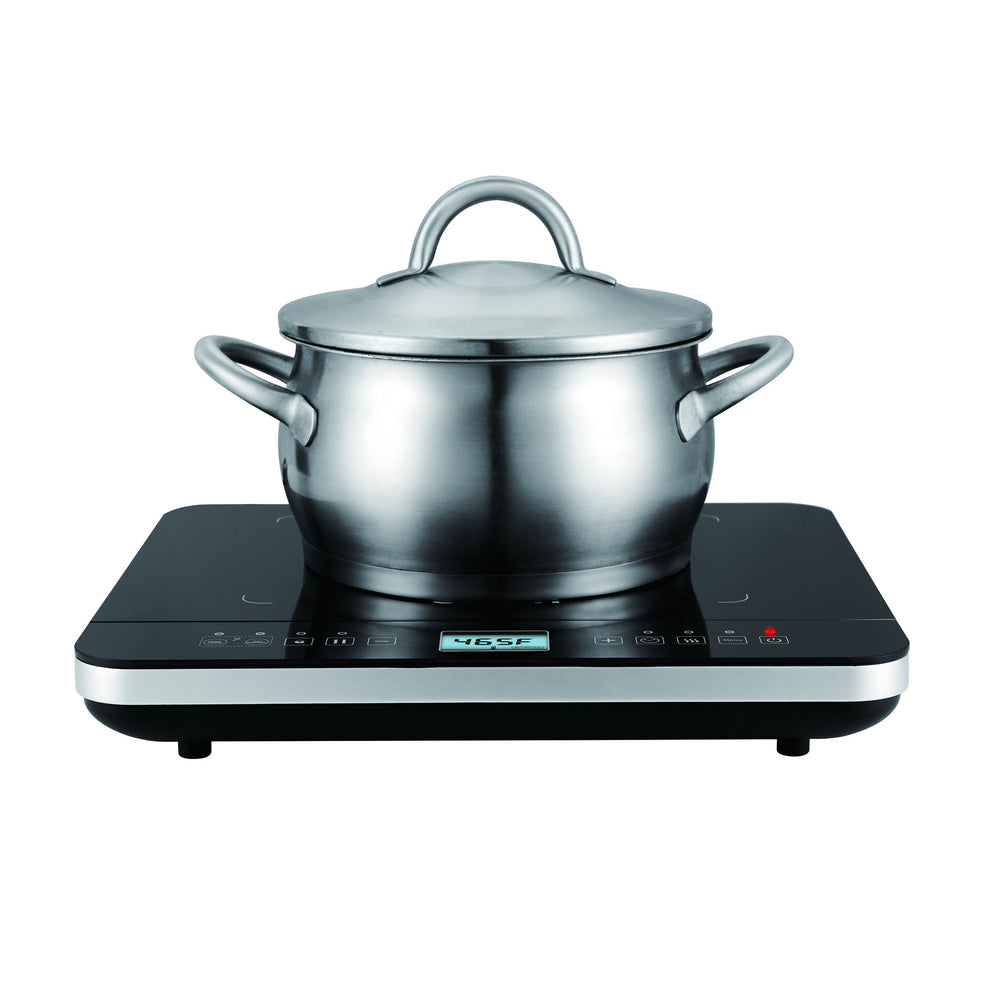
En gardant à l'esprit la table de cuisson à induction portable Salton, vous pouvez évaluer quelles fonctionnalités correspondent à vos habitudes de cuisson, que vous fassiez fondre du beurre pour une pâtisserie rapide, que vous cuisiniez des légumes à la vapeur ou que vous fassiez bouillir de l'eau pour les pâtes. Le bon modèle offre un contrôle de température de haute précision, des fonctions de sécurité fiables et un design qui s'intègre à votre routine quotidienne. Dans les sections suivantes, nous aborderons ces considérations avec une perspective pratique sur le budget, la durabilité et la fiabilité à long terme.
Les tables de cuisson à induction portables offrent un moyen flexible et écoénergétique de cuisiner partout où vous avez une surface plane et une casserole adaptée. Elles offrent un chauffage rapide, un contrôle précis et une sécurité au toucher froid, le tout dans un format compact qui peut être transporté de la cuisine à la salle de classe, au bureau ou au camping. En comprenant la puissance, les plages de température et l'importance des ustensiles de cuisine compatibles, vous pouvez choisir un modèle qui correspond à vos besoins et à votre style de vie. La table de cuisson à induction portable Salton représente une option robuste pour un usage quotidien, mais le bon choix dépend finalement de vos habitudes de cuisson, de l'espace dont vous disposez et des repas que vous préparez le plus souvent. Adoptez l'efficacité, la sécurité et la commodité de l'induction, et votre cuisine – où qu'elle se trouve – vous paraîtra plus performante que jamais.